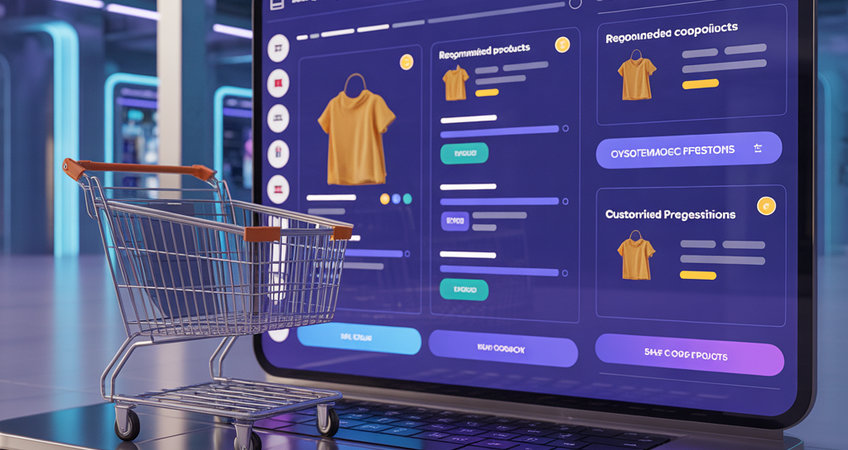
Strong customer relationships are at the heart of successful eCommerce businesses. eCommerce strategies that put the customer first can transform fleeting transactions into lasting partnerships.
eCommerce strategies build better customer relationships by leveraging data and technology to make every interaction more personal, seamless, and helpful throughout the end-to-end journey. And when these strategies are executed to the right standard, a business/brand will build strong relationships throughout each stage of the customer lifecycle.
The eCommerce strategies can be summarised under five headings:
#1. Personalised Experiences at Scale
Use first-party data (browsing, purchase, behaviour) to map out and construct end-to-end digital journeys that are precisely aligned to how consumers want to gather information and purchase.

Customers feel understood and heard when these experiences align with their engagement preferences. This, in turn, strengthens the chance of loyalty and repeat purchasing behaviours.
Examples of this are…
- Presenting dynamic product recommendations based on the consumer’s behaviour in the moment
- Triggered emails (“miss you”, replenishment) that align specifically to the customer’s recent behaviours
- Presenting personalised content on the homepage based on past experiences
- Using the consumer’s name in all messaging
This is where AI tools can add immense value. As long as they are carefully planned and aligned with eCommerce best practices, AI tools contribute significantly to creating personalised experiences at scale.
#2. Frictionless Customer Service Experiences
Seamless customer service is fundamental to building trust. “Seamless” for customers means…
- Fast response times
- Multiple support channels
- Self-service options
They all contribute to a positive experience.

When issues are resolved quickly and efficiently, customers feel confident in their choice and are more likely to complete purchases. This strategy supports both conversion and retention, ensuring that customers return knowing they’ll be looked after, without unnecessary hassle or delay.
It also empowers customers to increase their risk on purchases, meaning they will spend more, or purchase higher-priced items from a brand if the customer service function is to a high standard.
This is a core eCommerce strategy because this support function is designed to help customers who are engaging with a brand’s digital channel when in buying mode.
#3. Ongoing Engagement and Creating a Community
Broadcast meaningful content such as product guides, “how to” information, user-generated content and customer reviews to add value between customer purchases. This can be achieved via email and social media.
Proactivity in the above context builds a sense of community. This is heightened when a brand also actively converses on social channels, responds to comments, and shares customer stories.
These strategic activities make the brand feel present and human, increasing trust and emotional connection.
#4. Loyalty and Recognition
Use first-party data (see above) to understand customers’ post-purchase needs and, from this insight, implement relevant and meaningful loyalty programs and rewards that help activate repeat purchasing behaviour.
Also, do the simple things, such as celebrate key moments (birthdays, anniversaries, milestones) with personalised offers and messages.

Making customers feel recognised, heard, and appreciated increases brand-stickiness, driving customer lifetime value.
#5. Customer Centric Feedback Loops
Activate measurement systems that define precisely how customers feel about products and services.
These feedback loops need to be a mix of quantitative and qualitative data sets so the business can see trends but also gain a clear sense of the customer’s voice.
This will come in the form of…
- Behavioural data
- Surveys
- NPS
- Product and/or service reviews
- Incoming live chat data
- Analysis of social interactions (what are customers saying in Socials)
The second and more important aspect of this strategy is that once you have the insights, act on it!
If customers see that their voice is shaping their experience, it deepens trust and advocacy.
eCommerce Strategy Enhances the Customer LifeCycle
The above strategies appear to make sense on their own, but they are designed to bolster and amplify the effect of the four primary customer lifecycle phases…
- Acquisition
- Conversion
- Retention
- Advocacy

Acquisition:
relevant messaging, social proof, and content that address real customer needs (trust at first contact) drives first-time engagement and interactions with a brand.
Conversion:
Activating seamless personalised onsite experiences, frictionless checkout, and clear return policies that reduce anxiety prompts people to purchase form a brand for the first time.
Retention:
Highly relevant loyalty programs, reactive post-purchase support, and tailored offers bring customers back to drive repeat purchases.
Advocacy:
Customers who feel they are being heard, user-generated content and community engagement turn loyal customers into promoters.
Conclusion
To build customer relationships, a robust eCommerce strategy constructs incredible experiences for every stage of the customer lifecycle. If relevance and trust are achieved at every level of the life cycle, a brand creates customers for life.
For help defining your eCommerce priorities and roadmap, explore Comma Consulting's eCommerce strategy and strategic planning services.
Or learn more about Greg Randall's eCommerce consulting experience.
This article was as tagged as AI eCommerce , Digital Strategy , eCommerce Consulting