Most eCommerce projects begin the same way...
- The business chooses an eCommerce platform.
- An agency is appointed.
- Features are agreed on.
- Integrations between systems are locked down.
- Page layouts and templates are reviewed.
- The design commences.
It all feels logical but there is one problem, none of these decisions begin by asking:
How do customers want their experiences to be enabled so they can interact and buy from us?
That question usually comes later, many times much later.
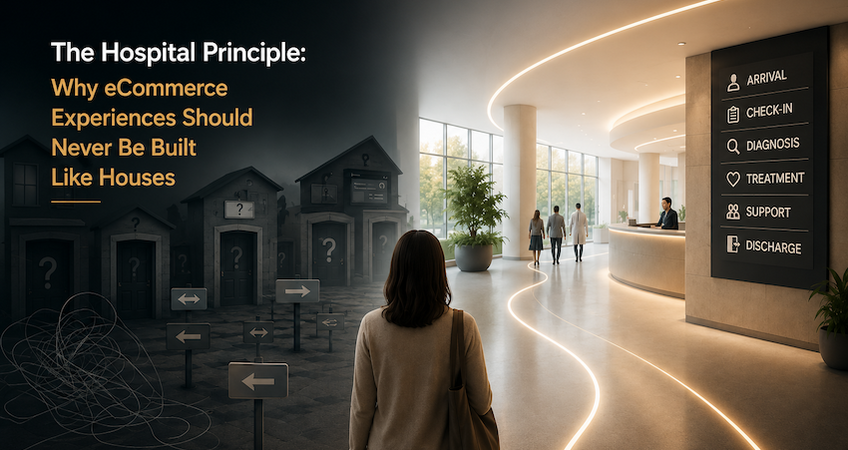
Without realising it, most businesses design their eCommerce experiences the same way they would design a house.
The House Approach
Think about how a house works...
- A house is designed for the same people to return to every day.
- Nobody needs directions.
- Nobody questions where to go.
- Nobody feels uncertain.
Why?
Because familiarity has been built over time through repeated use.
The house doesn't need to adapt to the people living in it, people have already adapted to the house!
This is exactly how businesses unknowingly approach eCommerce and digital experiences. They build a single digital experience and expect every consumer to adapt to it. The business assumes, if consumers spend enough time on the site, they will work out where everything is and how to buy.
For existing customers, that assumption might hold true. For first-time visitors, it's a dangerous way to think. Every new visitor arrives with different needs, levels of urgency and different stages of buying (early to late).
Unlike the family living in a house, they have no familiarity to rely on. Yet many digital experiences are still designed as though they do.
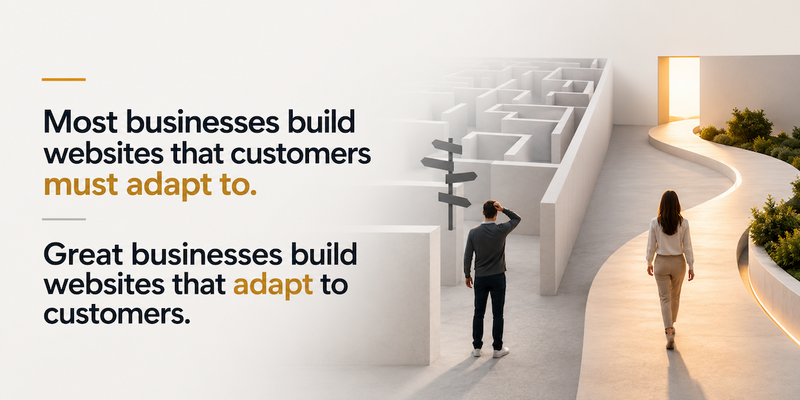
Most businesses build websites that customers must adapt to.
Great businesses build websites that adapt to customers.
If homes are designed for the same people to return every day, what type of environment is designed for people arriving for the very first time?
A hospital.
Explaining the Hospital Principle
Think about the people who walk through the doors of a hospital. Very few have been there before, yet every person arrives with a different need, a different level of urgency and a different understanding of what they need to do next.
Some require immediate treatment, others are attending routine appointments, while many simply don't know where to go or who to speak to.
Ultimately, every person who enters a hospital is vulnerable in some way and they willingly place their trust in an environment that has been deliberately designed to guide them towards the right outcome.
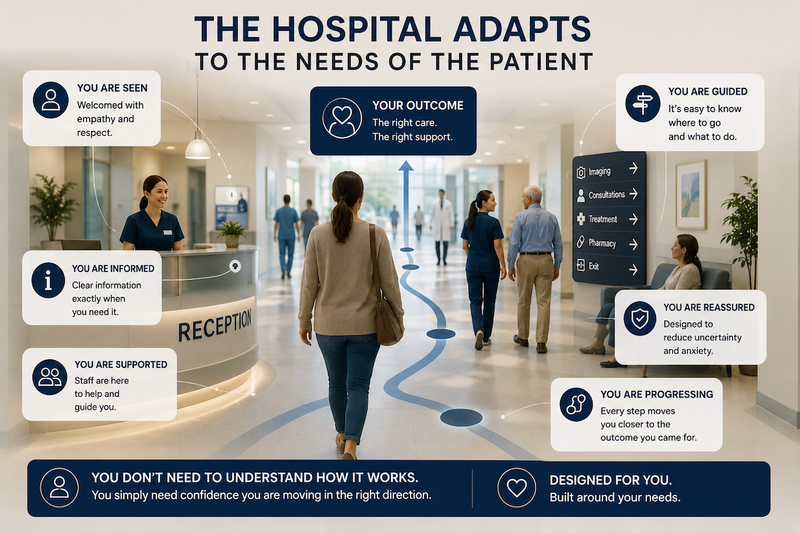
They don't need to understand how the hospital operates. They simply need confidence they are moving in the right direction.
Hospitals are designed around these human needs. Every interaction, every environment and every member of staff exists to help people progress towards the outcome they came for. The patient doesn't adapt to the hospital.
The hospital adapts to the needs of the patient.
Digital Vulnerability
Consumers arrive in digital experiences with a different kind of vulnerability. They may be uncertain about which product is right, whether they can trust the business, how to compare options or even where to begin.
Like hospital patients, they don't want the experience to make decisions for them, they want journeys to give them confidence that they are making the right decisions themselves.
That is the Hospital Principle.
Designing the Hospital Before Building It
If hospitals are designed around human needs, those needs must be understood before construction of the hospital begins.
Nobody starts building a hospital before deciding how patients will move through it, where emergency care belongs or how different needs will be accommodated. Those decisions are made long before the first brick is laid because the building exists to support the experience.
Yet this rush to start bricklaying is exactly how many eCommerce projects begin.
The first conversations are about selecting a platform, appointing an agency and discussing integrations, when they should be about understanding customer behaviour, designing buying journeys and defining the experiences the business wants to create for vulnerable humans.
Technology decisions are important, but they are not the first decisions.
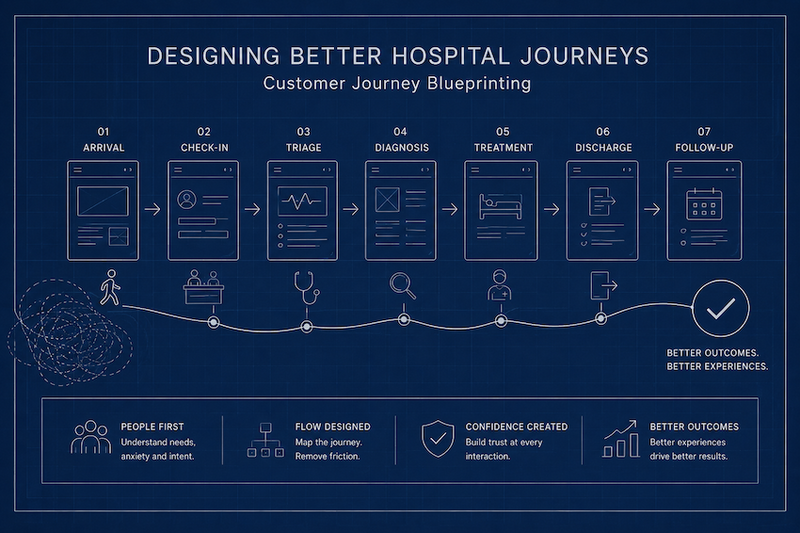
Customer Journey Blueprinting exists to reverse that sequence. It defines the customer experience before technology decisions are made, ensuring every design, content and technical decision supports the journeys customers actually need.
Design the experience first. Build the technology second.
The Hospital Principle
Businesses often believe they're implementing technology when, in reality, they're designing environments that shape human behaviour.
The organisations that understand this create digital experiences that feel intuitive, reassuring and natural because every interaction has been designed to help customers move confidently towards the outcome they came for. Technology enables those experiences, but it doesn't create them.
The businesses that struggle often blame platforms, agencies or implementation partners for disappointing results. More often than not, those problems were created much earlier, when the customer experience was never properly designed in the first place.
Patients don't judge a hospital by the building. They judge it by the care they receive inside it.
Customers do exactly the same thing online.
They don't remember which eCommerce platform powered the experience. They remember how confident they felt, how easily they found what they needed and whether the experience helped them achieve the outcome they came for.
That is the Hospital Principle.
For help defining your eCommerce priorities and roadmap, explore Comma Consulting's eCommerce strategy and strategic planning services.
Or learn more about Greg Randall's eCommerce consulting experience.

This article was as tagged as Best Practice , Digital Strategy , Digital Transformation , eCommerce Consulting