Customer Journey Blueprinting

Customer Journey Blueprinting

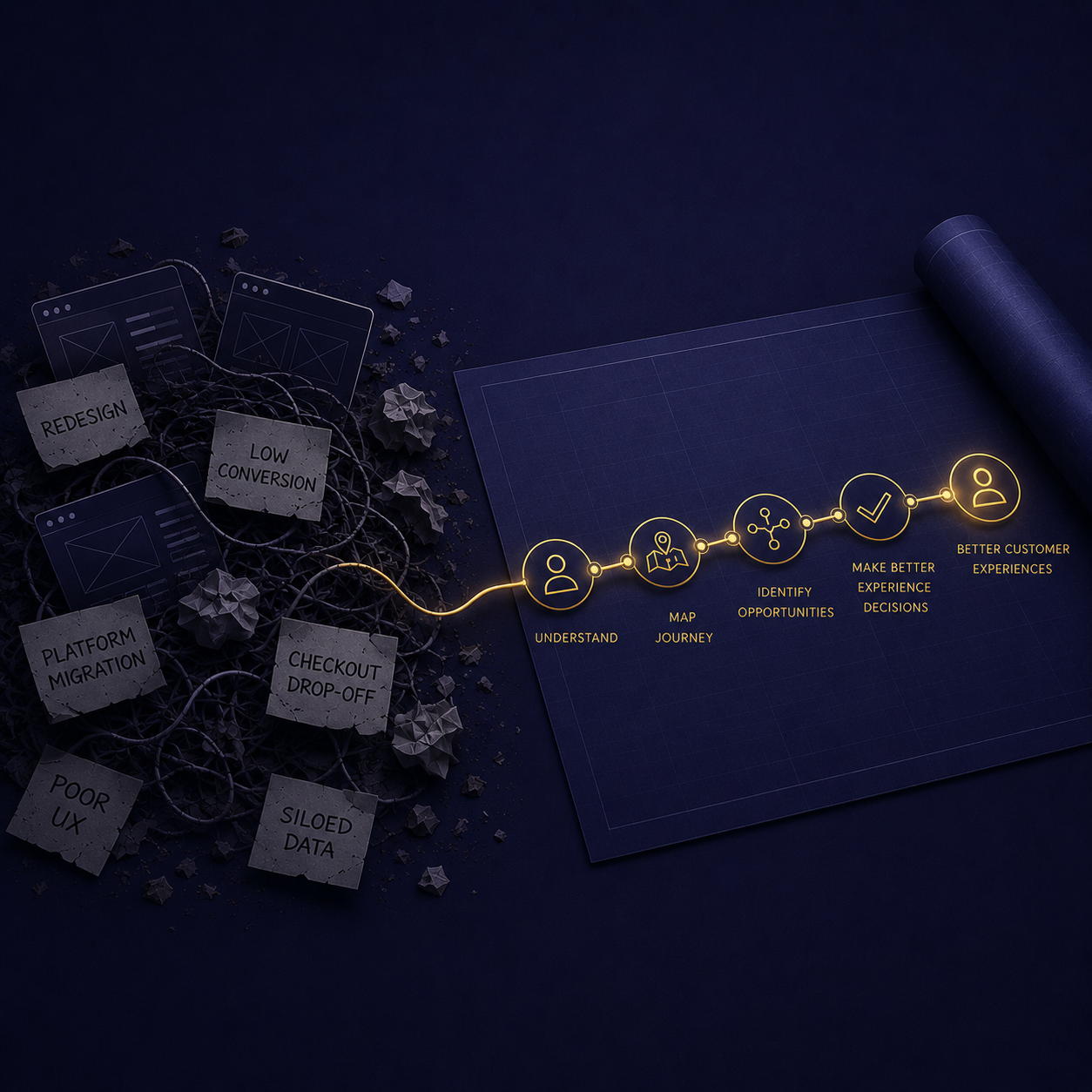
Customer Journey Blueprinting is the process of defining end-to-end digital experiences that align with how people want to interact with your business, services and products.

Most digital projects jump from strategy straight into design and development, creating a strategic disconnect between business objectives, customer needs and technology implementation.

The result is customer friction, stakeholder misalignment and scope creep.

Customer Journey Blueprinting bridges the gap between strategic planning and technology implementation.

It defines both the structure of the experience and how the experience must behave before design and development begin.

The process documents:

  • What customers see
  • What customers experience
  • How journeys progress
  • Where friction is removed
  • What content is required
  • What functionality is needed
  • How each page contributes to the wider journey

The Customer Journey Blueprint becomes the project's "Scope Bible" and single source of truth.

It:

  • Guides designers on how to overlay brand to blueprint page structures.
  • Defines the presentation layer for front-end developers.
  • Identifies what business information is required from supporting systems.
  • Frames the scope of work for project managers.

Most importantly, Customer Journey Blueprinting ensures customer needs are defined before technology decisions are made.

Instead of allowing technology to dictate customer experiences, the ideal customer experience is defined first and the technology required to support it is determined second.


image

The bridge between business strategy and technology implementation

Customer Journey Blueprinting Is Not UX Design

Many people assume Customer Journey Blueprinting is simply another form of UX Design.

It isn't.

Traditional UX Design often begins once technology decisions, platform decisions and project constraints have already been established.

At that point, the focus becomes improving screens, interfaces and interactions within those constraints.

Customer Journey Blueprinting starts much earlier.

Before design begins, it asks a different question:

What is the customer trying to achieve and how should the business support that outcome?

Only after those answers are understood should design and technology decisions be made.

This is why Customer Journey Blueprinting sits between strategy and implementation.

It defines the ideal customer experience first and then determines the technology required to support it.

Not the other way around.

image

CUSTOMER NEEDS FIRST. TECHNOLOGY SECOND.

The Tail Wagging The Dog Syndrome

One of the common causes of digital project failure is what I call “Tail Wagging The Dog Syndrome.”

The body of the dog is the customer and the business.

The tail is the technology.

When the tail starts wagging too aggressively, it disrupts the whole body. The dog is forced into uncontrolled shakes and shifts it cannot easily manage.

The same thing happens when a business changes its eCommerce/digital technology and focuses on technology selection first...

  • A platform is selected.
  • Features are prioritised.
  • Integrations are defined.
  • Technology constraints begin driving project decisions.

And then the customer experience is considered.

This forces the planning narrative to become:

“What can the technology do?”

When the business should be asking:

“What does the customer need to achieve?”

Tail Wagging The Dog Syndrome creates complex customer journeys constrained by technology decisions.

Customer Journey Blueprinting ensures the dog leads the tail, not the other way around.

image

DON'T LET THE TAIL WAG THE DOG

Built On eCommerce Scar Tissue

Customer Journey Blueprinting was not created as a theoretical framework.

It evolved through more than 25 years of planning and implementing eCommerce/digital projects.

Time and again, I observed the same pattern.

Technology decisions were made before customer needs were properly understood.

The result was unnecessary complexity, customer friction and projects that failed to deliver their intended value.

Customer Journey Blueprinting exists to break that pattern.

That's not theory.

That's eCommerce scar tissue.