For years, pure-play eCommerce businesses were seen to have a structural advantage over traditional retailers. No expensive store network and fewer legacy systems.
Walmart’s latest results are a useful reminder that the opposite can also be true.
Its US eCommerce business grew 24% in Q2, while store-fulfilled delivery grew 40%.
This is proof of what can happen when physical retail assets are properly connected to eCommerce.
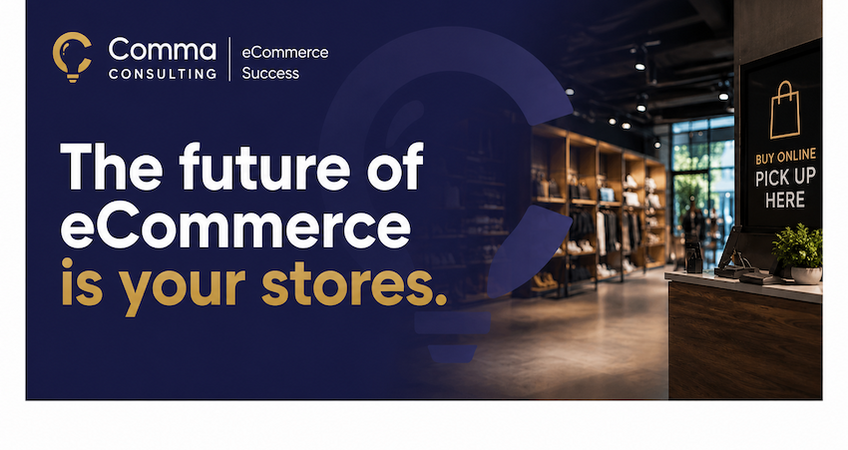
For successful retailers, a store hasn’t just been a “store” for a long time. It’s an eCommerce asset that can:
- Put inventory closer to customers
- Support collection and returns
- Enable faster delivery
- Reduce some of the fulfilment disadvantages that pure-plays continue to try to solve
BUT! Simply having stores is not a competitive advantage. Being able to orchestrate them properly is.
A high percentage of retailers with large store networks still have eCommerce and stores behaving like different businesses.
The irony is that this “recipe for success” has been around for a long time, and yet it continues to be ignored.
The importance of omnichannel experiences continues to reign supreme.
And remember this:
- You may amplify your AI tools to create better experiences, or
- You bolster your agentic capability to enable your products to be purchased through LLMs,
But the customer still needs to get the product. They still want to control the process of choosing whether to pick it up from a store or have it delivered.
That is a real customer problem that will never go away.
While it’s easy to fall into the trap of gravitating towards the shiny new toys, remember what matters to the people you are engineering experiences for.
Omnichannel experiences remain important for humans.
For help defining your eCommerce priorities and roadmap, explore Comma Consulting's eCommerce strategy and strategic planning services.
Or learn more about Greg Randall's eCommerce consulting experience.
This article was as tagged as Agentic Commerce , Best Practice , Digital Strategy , eCommerce Consulting